


Dannunziano Aparthotel
Case study | Dannunziano Aparthotel, Chieti
At the Dannunziano Aparthotel in Chieti, state-of-the-art technological solutions by Hoau automate digital check-in and check-out procedures, optimise access control, and guarantee significant energy savings. In addition to supplying the technologies, the Hoau brand also directly oversaw the design and installation.
dannunziano.it | hoau.it | pg-italy.it
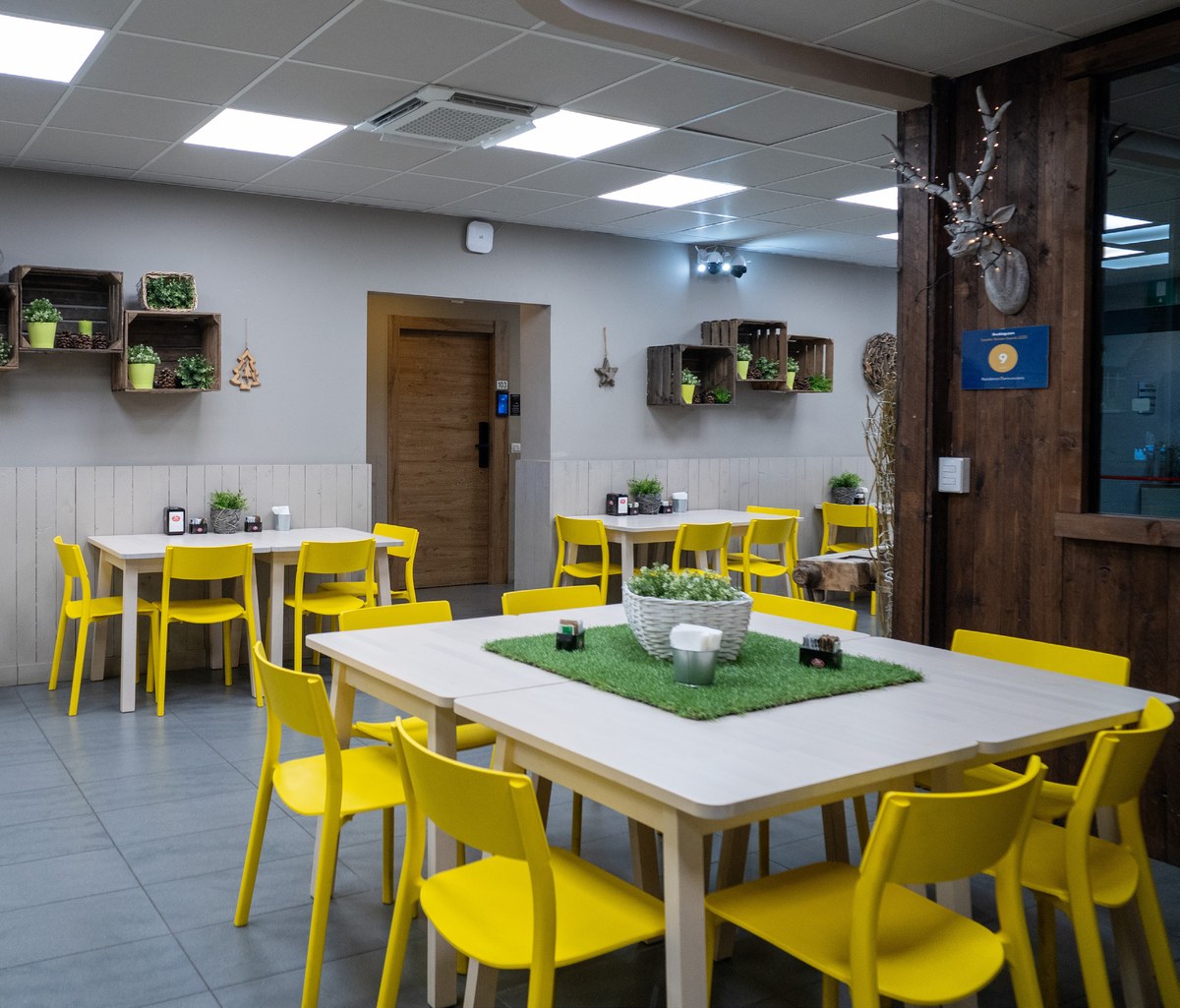
Il Dannunziano Aparthotel is a property located just a short walk from Chieti railway station. The digitalisation through Hoau solutions stems from the need to make the hotel's daily management more sustainable, reducing the continuous presence at reception and offering guests a more autonomous, flexible and simple experience right from check-in. In the opening photo, a communal area.
Il Dannunziano Aparthotel is a property located just a short walk from Chieti railway station. It offers bright rooms, spacious bedrooms and apartments equipped with all the main amenities, including a kitchenette, balcony, air conditioning and free Wi-Fi. The property is owned by Luciano Febbo, an entrepreneur active in the hospitality sector and Founder of Hoau, now a brand of Smau Srl, an innovative start-up specialising in home automation and self check-in solutions for hotels, B&Bs and holiday homes.
The Dannunziano Aparthotel itself represents the starting point of the Hoau project. The idea actually stems from a specific need of Febbo himself: to simplify and optimise the operational management of his property, reducing the need for reception staff presence, making check-in and check-out procedures smoother, and improving control over room access. Added to these objectives was the desire to generate efficiencies in terms of costs and energy consumption, with a positive impact on internal organisation and the guest experience. The initial solutions, both hardware and software, were developed by Giuseppe Capuzzi, a technology enthusiast and currently the company's CTO. These tools made it possible to respond concretely to the operational needs of the Dannunziano Aparthotel, transforming the property into an initial testing ground. Over time, the system has progressively evolved and been enriched with new features, eventually becoming a complete, field-tested platform subsequently offered to the hospitality market.
The success of the pilot project prompted Giuseppe Capuzzi and Luciano Febbo to invest in technological services for hospitality, creating the company SMAU, an acronym for “Smart Automation”, and the brand Hoau, from HOtel/HOme Automation. The creation of Smau Srl, supported by the entry of new partners, consolidated the company's structure with a clear objective: to accelerate the development of cutting-edge technologies for an increasingly broad market. The brand's horizon thus extended well beyond the accommodation sector.
Today, the HOAU brand exports its know-how and technological support to highly complex environments, such as social healthcare and care facilities, corporate entities, industrial areas and construction sites, redefining the standards for flow management and security. Today, the HOAU platform boasts over 20,000 managed devices and approximately 15 million unlocks per year.
The Hoau platform today
The Dannunziano Aparthotel, the subject of this case study, thus represents not only the place where the Hoau project took shape, but also its primary testing ground: a real-life case in which the solutions developed by the company find integrated and continuous application. We discuss this with Luciano Febbo, Sales Manager of Smau and owner of the Dannunziano Aparthotel, and with Giuseppe Capuzzi, CTO of Smau and expert in automation technologies.
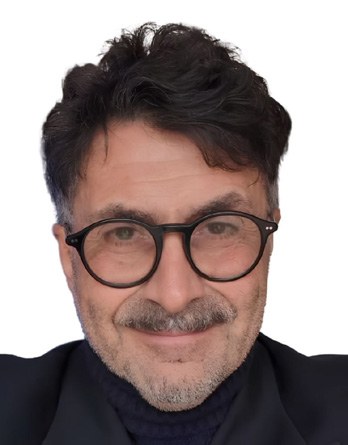 Luciano Febbo, Sales Manager of Smau
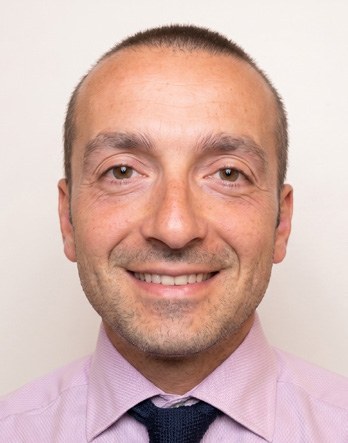 Giuseppe Capuzzi, CTO of Smau
The challenge: part-time reception, automated check-ins and energy saving
Luciano Febbo acquired and began personally managing the Dannunziano Aparthotel in Chieti in 2015. It is a property consisting of 23 apartments on a holiday-home basis and 44 traditional rooms, for a total of around 96 beds. Where did the need to digitalise the management of the aparthotel come from? What were Febbo's priorities and objectives?
Reduction of the presence at reception – Right from the start, day-to-day management proves particularly demanding, especially due to the need for a constant presence, often until late in the evening, with a significant impact on the entrepreneur's quality of life. As Febbo recounts, the initial goal was not so much to reduce costs as «not to be a slave to my new business, without compromising the quality of the service offered. It was unthinkable to spend up to 20 hours a day in the hotel, giving up time to devote to my family.»
Simpler, more flexible check-ins – Another critical point was the inflexibility of check-in times, with guests forced to arrive within limited time windows or, as Febbo points out, «with the obligation to spend many hours at reception waiting for their arrival, even late in the evening or at the weekend.» This resulted in an onerous, inflexible operational model that was heavily dependent on variables that were difficult to control.
Cost reduction – The initial business plan did not fully take into account the impact of staff on economic sustainability: 24-hour reception, complex shift patterns, sudden absences and fixed costs that are difficult to absorb. «The second objective,» explains Febbo, "was to reduce these fixed costs while at the same time centralising control and maintaining a high quality of service, to ensure continuity, efficiency and sustainability in the medium-to-long term."
“Smart” energy saving” – High energy costs are no longer merely a budget item in the hospitality sector, but a structural challenge. For hotels, this has resulted in cost increases of up to 96.7% compared with the pre-crisis period. That is why, says Febbo, «my third objective was energy saving based on flexible and intelligent approaches, capable of balancing comfort and costs whilst maintaining a high standard of service.»
«The traditional management model was no longer sustainable: I had to completely overhaul the access, reception and daily operational procedures, for both personal and financial reasons.»
Luciano Febbo
The solutions: access control and room sensors
From the needs described, discussions began with Giuseppe Capuzzi, an expert in automation technologies. Thus a journey took shape that transforms a personal problem into a solution that will subsequently be replicable for other hospitality facilities too.
From this perspective, Hoau develops to all intents and purposes as a project born “in the field”, experienced first-hand and built around real needs. The objective is clear, and corresponds to Febbo's challenge: to ensure that automation and technology “do the work” for the hotelier, without requiring advanced technical skills or a constant presence, whilst simultaneously improving the guest experience.
Automated access management – The first phase of the automation journey began in 2015 and focused on digital and autonomous check-in to reduce reception desk hours. «The first version,» recounts Capuzzi, “used simple wired numeric keypads, similar to those on gates: Luciano manually generated the codes and sent them to guests via SMS.” Although still rudimentary and "offline", the system proved effective: time spent at reception decreased significantly and guests expressed satisfaction. Subsequently, a system based on mobile Bluetooth technology was introduced, also offline, which nonetheless required the manager to be physically present near the door to generate the PIN.
«To further reduce our presence at the hotel and simplify code generation,» Capuzzi continues, "we switched to a Wi-Fi solution that allowed us to generate and send codes remotely, easily and quickly, from anywhere."
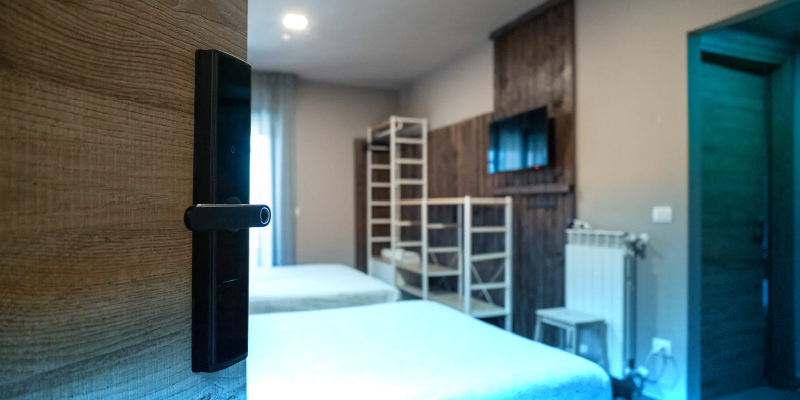
The solution currently installed in the rooms has been further refined: it is a self-installing kit, to be mounted on the door, available in various models designed for different types of entrances and suitable for every possible requirement. The devices communicate via a Zigbee network in total security, using unique encrypted digital certificates. Upon booking, the guest receives their customisable digital code via SMS/email and, through web check-in, is free to plan their arrival at any time of day or night, without downloading any app, simply by entering the code on the keypad to access the room.
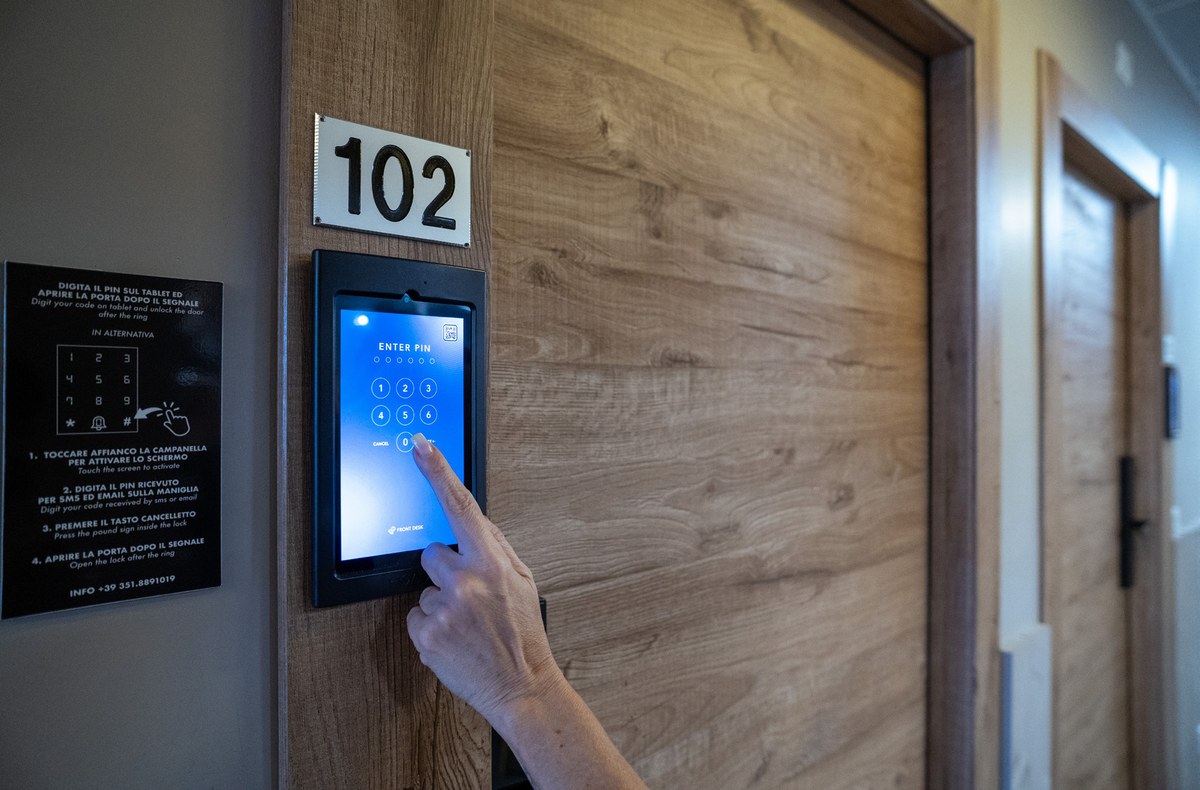
The digital access system allows guests to receive a personalised code and enter their room without an app, physical keys or time restrictions, simplifying the property's operations and enhancing arrival flexibility.
«The Hoau system also includes Zigbee smart door handles with a touch keypad and fingerprint reader – adds Capuzzi – used not only for room access by guests and cleaning staff, but also for restricted areas such as kitchens and technical rooms so that different access levels can be defined and monitored.»
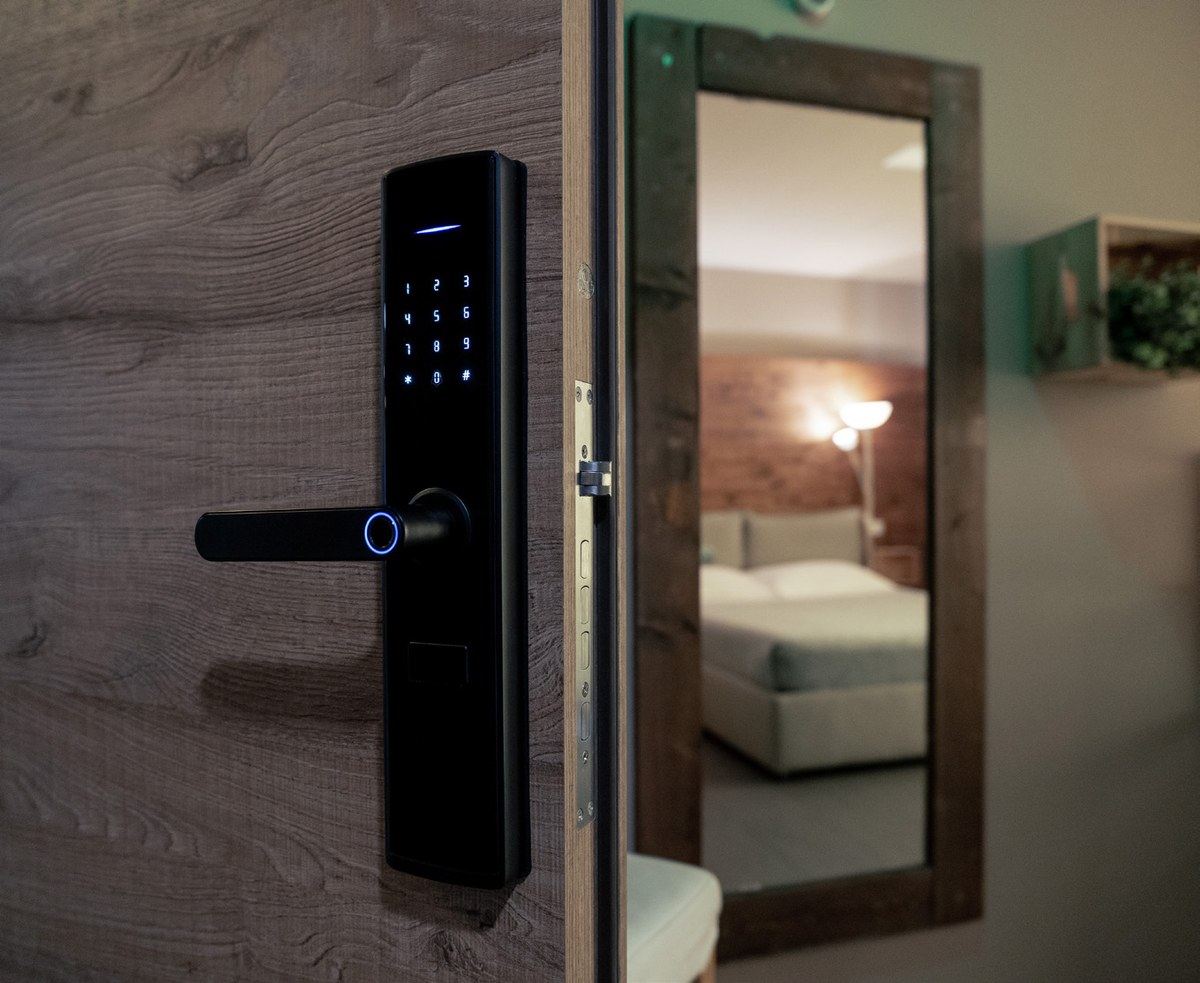
Zigbee smart handles allow guests to access rooms independently via a digital code, with no need for apps or physical keys. Equipped with a touch keypad and fingerprint reader, they are also used for restricted areas and technical rooms, allowing different levels of access to be defined and monitored securely and centrally.
Hoau & PG Italy: a strategic partnership
Hoau has entrusted PG Italy – the largest network of digital professionals specialising in electrical systems, cabling, TV reception systems and telco services – with the installation and maintenance of its systems across the entire national territory.
«The partnership with PG Italy – explains Febbo – guarantees us a widespread installation and support network. Customer service operates five days a week: should the need arise, a technician will intervene within a few hours or even minutes if the issue can be resolved remotely.»
«As well as offering installation and maintenance services – explains Paolo Minto, CEO of PG Italy – for Hoau we are a sales channel: our installers who work in the hotel sector can propose the Hoau solution to any interested businesses. This thinking is not limited to hotels: Hoau technologies are also in demand from companies, professionals, shops, construction sites and even private individuals interested in advanced access control systems.»
Zigbee energy saving sensors – Over time, the automation project extends beyond access control. Capuzzi designs an IoT system based on the Zigbee protocol, independent for each room, with the aim of monitoring guest presence – while fully respecting privacy – and reducing energy consumption in their absence, a reduction that has in fact been achieved and has translated into very significant savings, which we will discuss further on.
A Zigbee gateway is installed in each room; this is a control unit that receives signals from the motion sensors (using passive infrared technology), presence sensors (radar) and window opening/closing sensors (magnetic contact), as well as from the smart door handle we have already discussed. The generated events are sent to the gateway, which in turn forwards them to the smart miniature circuit breakers (also Zigbee) and to the central dashboard.
«We chose to install a Zigbee gateway in every room – explains Capuzzi – to achieve a stable, reliable and high-performing system, avoiding the use of shared gateways across 2–3 rooms, which could have reduced the radio signal coverage (in the 2.4 GHz band, ed.) and complicated troubleshooting on the wireless network.»
The motion and window-opening sensors are powered by disposable batteries, a solution that simplifies their installation and positioning. The presence radars and miniature circuit breakers are instead connected directly to the mains electricity supply.
«As for smart sensors,» continues Capuzzi, "we tested several models until we selected a major Chinese company which we asked to manufacture the sensors to our specifications, so as to guarantee the required reliability and performance. The batteries are also Hoau-branded and produced to our specifications by another major third-party Chinese company. They last an average of 2 years, can be replaced in a few seconds and are monitored through daily reports with alerts on a dashboard."
Thanks to customisable automations, the system switches off lights and air conditioning or activates “economy” mode when no presence is detected or when a window is left open. Everything happens according to configurable rules and timings.
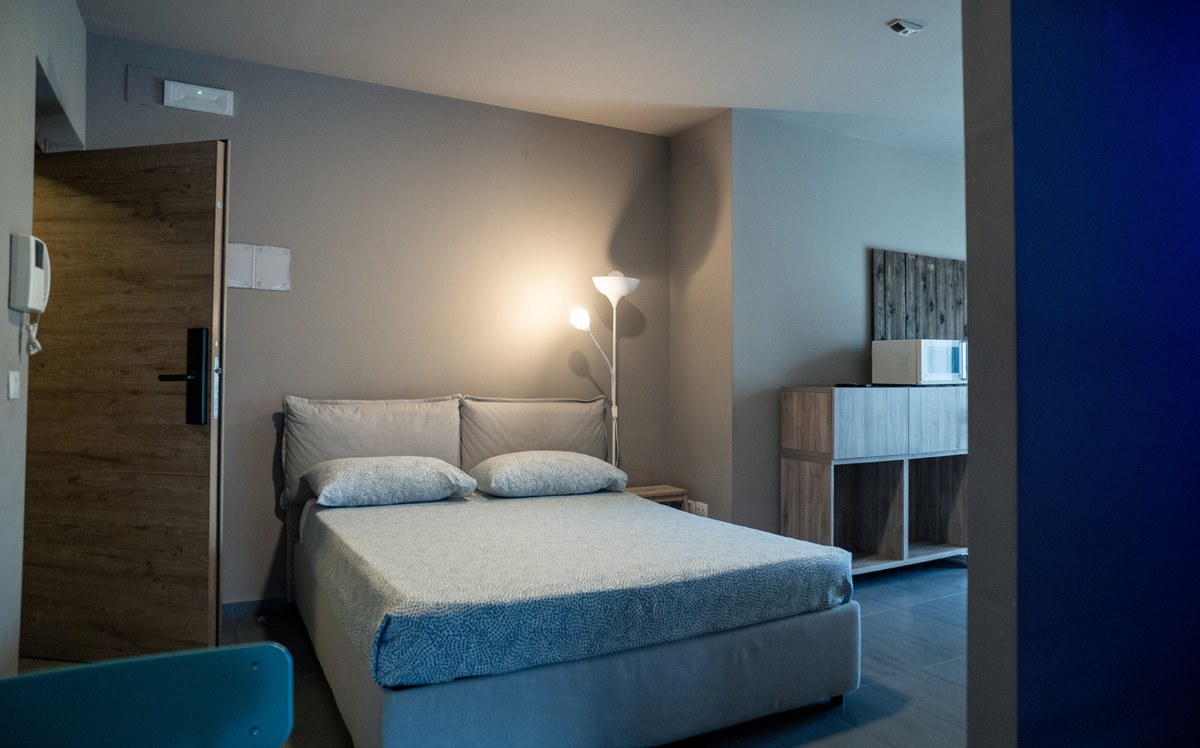
Motion, presence and window-opening sensors make it possible to monitor the status of the room while respecting privacy and to activate smart automations to reduce energy consumption by turning off lights and air conditioning or setting economy modes when the room is unoccupied or when a window is left open.
Customised Tuya platform – The Hoau system is based on the well-known Tuya smart platform, suitably customised compared to the consumer version. Firmware and management system have been developed and adapted to guarantee full control over stability, functionality and updates. «As a Tuya Premium Partner,» explains Capuzzi, "Hoau can intervene on every component of the system to optimise its performance."
Quick and clean installation, even with the room occupied – The installation of the solution in its various components was quick and easy, minimally invasive and integrated easily with existing systems, without requiring any masonry work and without forcing the hotel to experience any operational downtime.
As Capuzzi points out, «one or two technicians can automate and smart-enable a room in about two hours, thanks to battery-powered sensors and an optimised installation procedure. The work can also be carried out while the room is occupied, without soiling furnishings or guests» personal belongings, reducing room downtime to a minimum—if not eliminating it entirely".
Centralised dashboard and PMS integration The centralised monitoring platform manages access, energy consumption, battery status and Wi-Fi and Zigbee connectivity for thousands of devices in real time.
«Thanks to the movement and presence sensors,» explains Capuzzi, "reception can see the occupancy status of the rooms to manage tasks like housekeeping. In an emergency, the sensors show in real time which rooms are occupied, making evacuation procedures easier."
Another strength of the Hoau platform is its integration: the dashboard integrates with leading industry PMSs, including TeamSystem and Scidoo, automating the sending of access codes to guests. The simplicity of digital check-in significantly enhances the guest experience, as do personalised codes, smart door handles, optional fingerprint access and configurable home automation features, which make the stay more independent, flexible and comfortable.
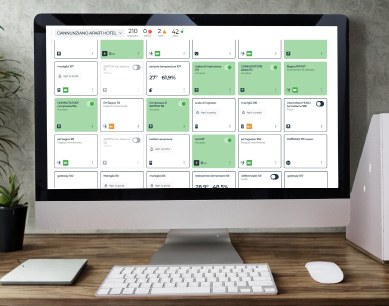
The centralised Hoau dashboard manages data from devices installed in the rooms in real time, monitoring access, guest presence, temperature, connectivity and operational status.
Affordable solution, without compromise – The Hoau solution is designed for hospitality operators who wish to automate a large number of rooms and apartments without having to make significant investments. «Our solution,» explains Capuzzi, “is up to 65% cheaper than traditional home automation systems, without compromising on effectiveness, security and guest comfort.”
«The Hoau solution is based on reliable technologies, installs in just two hours, adapts to existing systems and requires no structural work.»
Giuseppe Capuzzi
Did you know that…
Hoau offers a service that can be replicated in the hospitality sector as well as in healthcare, social-healthcare and public administration facilities.
End-user satisfaction
According to Febbo, the automation system represented a turning point: it reduced his presence at the hotel, cut energy costs without penalising comfort and allowed staff to be redeployed to higher value-added activities.
The Dannunziano Aparthotel in Chieti, set in a dynamic urban context with a flow of guests linked to work, university and industrial activities, serves as the operational hub for the group's other properties, all managed via Hoau: a country house with 12 apartments and 4 guesthouses for around 50 people. In total, Luciano Febbo manages nearly 180 beds, with the reception operating only in the morning. All other activities – payments, document collection, guest registration and access management – are automated.
«The financial results,» emphasises Febbo, “speak for themselves: in 2025, turnover reached €800,000, whilst the gross operating profit stood at 46.9%, largely thanks to the automation project, which significantly reduced staff and energy costs. The daily energy cost per room, amounting to around €0.80 — well below the national average of €3 — has enabled us to reinvest our profits, increase the number of beds and continue with the digitalisation of our facilities.”
The contact numbers for the Dannunziano Aparthotel
Improve the customer experience – Customer satisfaction is also high, with a rating of 9.0 on Booking.com. Reviews highlight the ease of access, the autonomy guaranteed by automation, the possibility of arriving at any time without having to worry about physical keys, and without the need to meet other people during the stay, whether for personal or business reasons.
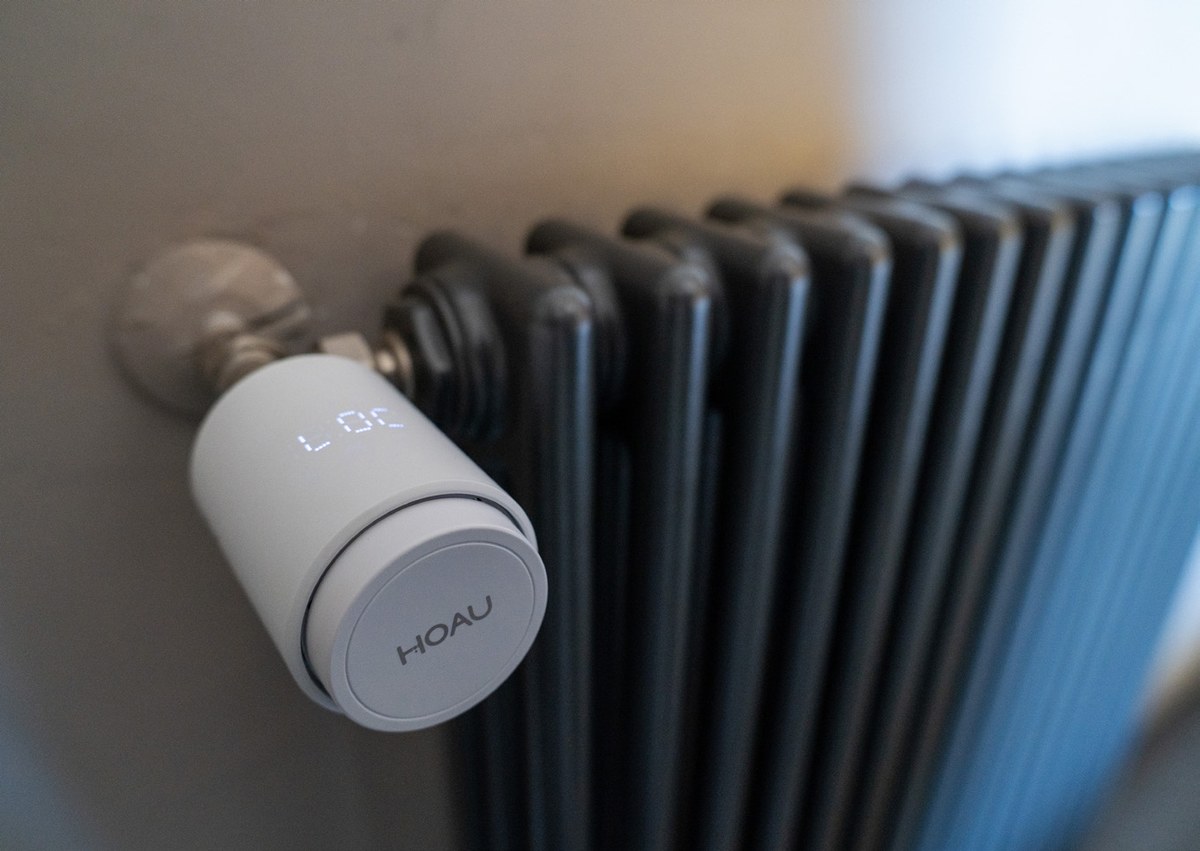
Smart Zigbee thermostatic valve installed on the radiator: the device allows you to adjust the room heating automatically and in an integrated way with the energy-saving logic of the Hoau system.
This is further confirmation of how technology can genuinely improve the guest experience, assist hoteliers and reduce management costs without compromising the quality of the services offered.
Articolo pubblicato riprodotto in collaborazione con Sistemi Integrati, click here to read it in full.
Facci sapere la tua opinione, commenta!